

U.S. Elections

What do you know about the U.S. elections?
How U.S. elections work
In the U.S., the president is chosen through the Electoral College, not by direct popular vote. Each state has a certain number of electoral votes based on its population. The candidate who wins the majority of votes in a state typically takes all of that state's electoral votes.
The candidate with at least 270 electoral votes out of 538 wins.
Why the winner of the most votes in the U.S. presidential election can still lose the presidency

Political parties and their candidates
Democrats - Kamala Harris
Republicans - Donald Trump
The Democratic Party generally supports progressive and liberal policies. They advocate for government involvement in issues like healthcare, education, and climate change, believing it can help create equality and opportunities for all. The party focuses on social justice issues, such as LGBTQ+ rights, immigration reform, and gun control. Democrats typically favor higher taxes on the wealthy and expanded social services to reduce inequality.
The Republican Party generally supports conservative policies, emphasizing limited government involvement in people’s lives and the economy. They advocate for lower taxes and reduced government spending, believing it promotes individual freedom and economic growth. Republicans often prioritize traditional values, strong national security, and gun rights. They also support less regulation for businesses and aim to limit government programs.

Kamala Harris is the current Vice President of the United States, serving alongside President Joe Biden. She is a member of the Democratic Party and previously served as a U.S. Senator from California. Known for her work on criminal justice reform, healthcare, and civil rights, she was the first woman, the first Black woman, and the first person of South Asian descent to hold the office of Vice President. Harris is known for advocating progressive policies on climate change, immigration, and healthcare.

Donald Trump is a former President of the United States (2017-2021) and a prominent figure in the Republican Party. Before his presidency, he was a businessman and television personality. His policies focused on tax cuts, deregulation, strong immigration controls, and an “America First” foreign policy. Trump’s presidency was marked by controversial positions on immigration, trade, and international relations, and he remains an influential figure within the Republican Party.
The electoral college
In today's class we have the following states that are voting:
- California: 55
- Texas: 38
- Florida: 29
- New York: 29
- Ohio: 17
- Pennsylvania: 19
- Georgia: 16
- Michigan: 15
- Iowa: 6
The candidate with the most votes in a state wins all of that state's electoral votes.
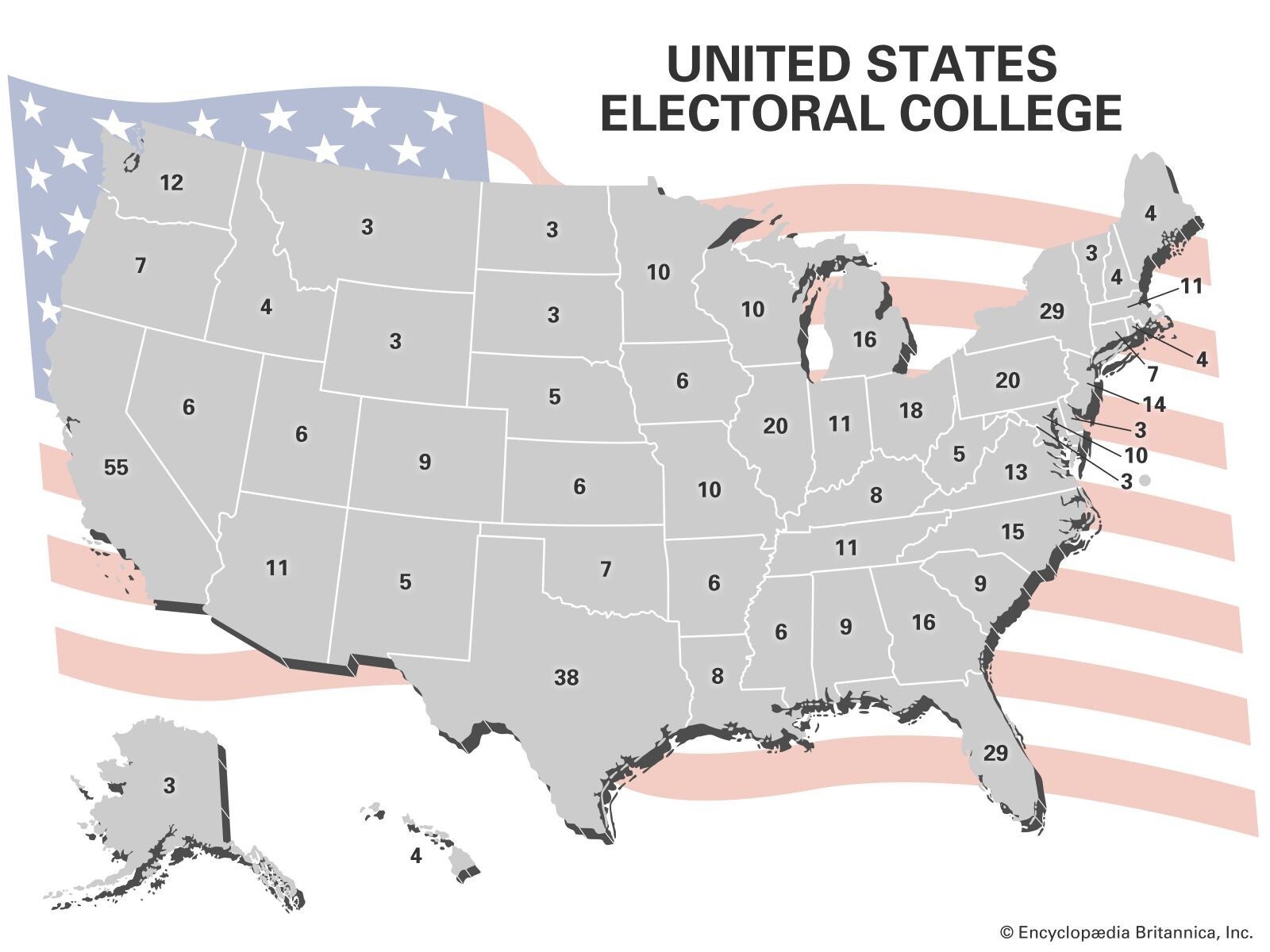
Republican, Democratic or swing states?
Voting instructions
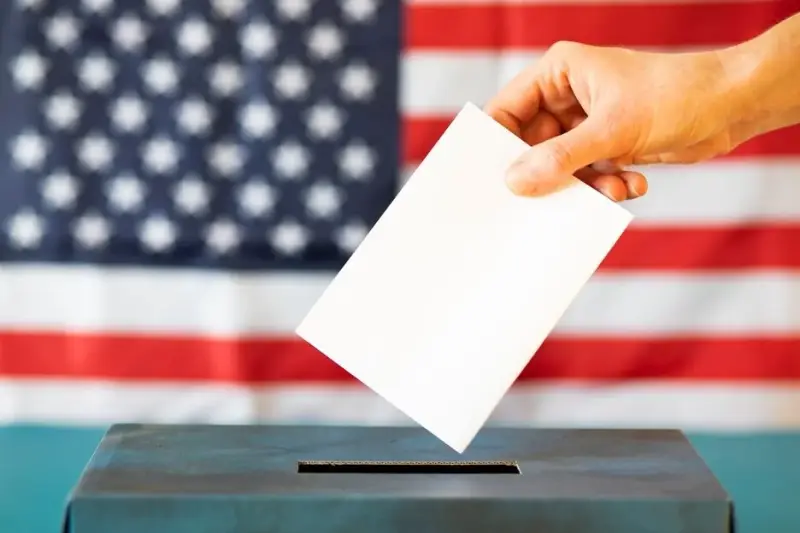
- With your group you will represent a state and cast your vote for Kamala Harris or Donald Trump.
- Each state has a different number of electoral votes. Larger states have more votes.
- Write the name of your chosen candidate on a post-it and place it in the ballot box.
- After the votes are counted, we will tally the electoral votes.
Counting the votes
After the popular votes are counted, we will assign electoral votes to the winner in each state.
- Popular votes
- Electoral votes
- The candidate with at least 270 electoral votes wins the election.
Keep an eye on the swing states! They could decide the outcome.

Analyzing the election

- Was there a difference between the popular vote and the electoral vote?
- How did the number of electoral votes in each state affect the outcome?
- Do you think the U.S. election system is fair?
- How does it compare to the Dutch system?
Maak jouw eigen website met JouwWeb